
The short version
- Bitcoin is a digital currency run by a public network rather than a company, with a hard limit of 21 million coins.
- Miners add a new block roughly every ten minutes; the block reward halves about every four years and has been 3.125 BTC since April 2024.
- It is highly volatile and irreversible to send; how you store it matters as much as how you buy it.
What is Bitcoin? It is money that exists only as entries on a public ledger kept by thousands of independent computers, with rules that no single company or government controls. It was described in a 2008 paper published under the name Satoshi Nakamoto, and the network started running in January 2009. Since then it has become the largest crypto-asset and the one most platforms list first.
How the network works
When you send bitcoin, your wallet signs a message with your private key and broadcasts it to the network. Nodes check that the signature is valid and that the coins have not already been spent. Valid transactions wait in a queue until a miner includes them in a block. Once a block is added and more blocks are built on top of it, the transaction becomes steadily harder to reverse; many platforms wait for several confirmations before crediting a deposit.
No one approves accounts, and no one can reverse a payment. That is the feature and the risk in one: nobody can block your transaction, and nobody can undo a mistake or a theft.
Mining and the halving
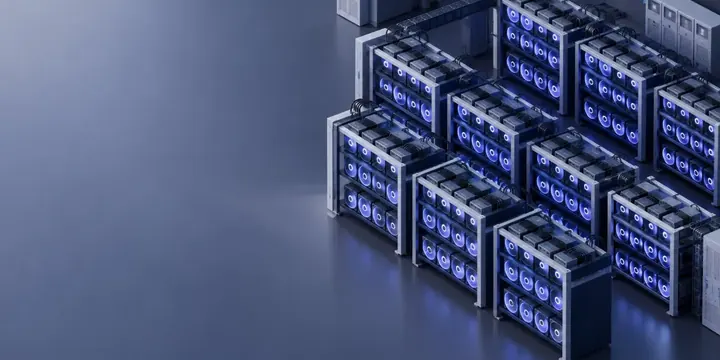
Miners run specialised machines that repeatedly guess a number until one produces a block that meets the network's difficulty target. The winner adds the block and receives the block reward, newly created bitcoin plus the fees from the transactions in the block. The network adjusts the difficulty every 2,016 blocks so that, however many machines join, a block arrives roughly every ten minutes.
Every 210,000 blocks, about every four years, the new-coin part of the reward is cut in half. It began at 50 BTC and has halved in 2012, 2016, 2020 and April 2024, to 3.125 BTC today. The next halving is expected around 2028.
Worked example: daily new supply
With a block about every ten minutes there are roughly 24 × 60 ÷ 10 = 144 blocks a day. At 3.125 BTC per block, that is about 144 × 3.125 = 450 new bitcoin a day, before transaction fees. Actual numbers vary because blocks do not arrive at exact intervals.
The 21 million limit and satoshis
Because the reward keeps halving, the total supply approaches but never exceeds 21 million bitcoin. The last fractions are expected to be issued around the year 2140. Some coins have certainly been lost for good through forgotten keys, so the number in active circulation is lower than the number issued.
Each bitcoin divides into 100,000,000 satoshis (sats). So 0.0025 BTC is 0.0025 × 100,000,000 = 250,000 sats. You do not need to buy a whole coin; most platforms let you buy a few dollars' worth.
A fixed supply does not mean a stable or rising price. Price depends on demand, which has swung dramatically; bitcoin has fallen by more than half from its peak several times in its history.

Buying and storing bitcoin
Most people buy through an exchange or broker app. Some brokers also offer products that follow the bitcoin price, such as exchange-traded products, without you holding coins; availability depends on your country. Holding the coin itself gives you the option of self-custody.
- On a platform: simple, recoverable by password reset, but exposed to the platform's security and solvency.
- Software wallet: an app you control with a recovery phrase. Good for small amounts; your phone's security becomes your coins' security.
- Hardware wallet: a device that keeps keys offline and signs transactions internally. Buy only from the manufacturer or an authorised seller, and never use a device that arrives with a recovery phrase already filled in.
Whatever you choose, the recovery phrase is the master key. Record it by hand, store it away from any connected device, and treat any website or "helpdesk" asking for it as hostile.
Think, too, about what happens if you are not around. Coins in self-custody cannot be reclaimed by relatives through a bank or a court order unless someone can find the recovery phrase and knows what it is. Many holders leave clear, secure instructions with their will or with a trusted person, without writing the phrase itself anywhere others could casually read it. On a platform, the account can usually be claimed by an estate, but the process can be slow and requires documents.
Fees and speed
Transaction fees on the Bitcoin network rise when many people want to transact at once, because miners pick the transactions paying the most per unit of data. A payment can confirm in the next block or wait hours if you pay a low fee at a busy time. Separate systems built on top of Bitcoin, such as the Lightning Network, allow small, fast payments, though support varies across wallets and platforms.
Exchanges also charge their own fees for trading and withdrawals; our guide to trading fees explains them, and the crypto profit calculator shows their effect on a result.
What is Bitcoin used for today?
The original paper described a peer-to-peer electronic cash system, and bitcoin can still be used to pay anyone, anywhere, without an intermediary. In practice, most people hold it as a speculative or long-term asset rather than spending it. Supporters describe it as "digital gold": scarce, portable and independent of any central bank. Critics point to its volatility, which makes it awkward both as everyday money and as a store of value over shorter periods.
Other uses include moving value across borders where banking is slow or expensive, and holding savings outside a local currency that is losing value. Each of these depends on being able to convert bitcoin into and out of local money at a fair price, which brings the exchange and its fees back into the picture.
The debates worth knowing about
- Energy: proof-of-work mining uses large amounts of electricity. How much of it comes from renewable or otherwise wasted energy is disputed.
- Security budget: as block rewards keep halving, miners must rely increasingly on transaction fees. Whether fees will be enough to keep the network secure in the long run is an open question.
- Privacy: Bitcoin is pseudonymous, not anonymous. Every transaction is public, and addresses can often be linked to identities through exchanges.
Risks to weigh
Beyond price, the main risks are practical: losing keys, sending to the wrong address, trusting a platform that fails, and scams that use bitcoin because payments are hard to trace and reverse. Read how to spot scams and how to choose a platform before buying.
Reader questions
Who controls Bitcoin?
No single party. Developers propose software changes, but node operators choose which software to run, and miners secure the network. Changing core rules such as the supply limit would need broad agreement across all of them.
When is the next Bitcoin halving?
The halving happens every 210,000 blocks. The last one took place in April 2024, so the following one should fall around 2028; the exact date depends on how quickly blocks are found.
Can Bitcoin be hacked?
The network itself has proved very resilient. Most losses come from hacked exchanges, stolen recovery phrases, malware and scams, rather than from breaking Bitcoin's cryptography.
Sources
- Bitcoin whitepaper, Satoshi Nakamoto (2008)
- Bitcoin Core protocol documentation: difficulty adjustment and subsidy schedule